

If you're thinking about getting Viking bracelet tattoos, it's a good idea to learn a little about the history, culture, and art of these Nordic warriors who were so popular throughout history.
The Vikings, known for their fierce spirit, seafaring achievements, and extensive explorations, left an indelible mark on history. While their raids and historical exploits often come to mind, their rich culture and art also deserve recognition.
Viking tattoos hold a prominent place in the culture, as they are highly symbolic and deeply rooted in Nordic culture, religious beliefs, and traditions. These designs were typically worn by men and were seen as a way to pay homage to their ancestors and their cultural and ancestral beliefs.
Today I can also be used by people with Nordic heritage, or those who feel identified with their symbology, mythology and beliefs. It is very important for such people to proudly wear a tattoo with these designs.
Viking bracelet tattoos and their rich history
The Vikings, a seafaring people from the late XNUMXth to early XNUMXth centuries, came from what is now Scandinavia. These skilled artisans and traders traveled on their iconic longliners, venturing far and wide across Europe, Asia, and even North America, centuries before Columbus.
Although their primary means of communicating and documenting their stories was oral tradition, Viking culture also held a deep reverence for visual expression. They carved intricate designs and symbols into stone, wood, metal, and probably even their own skin.
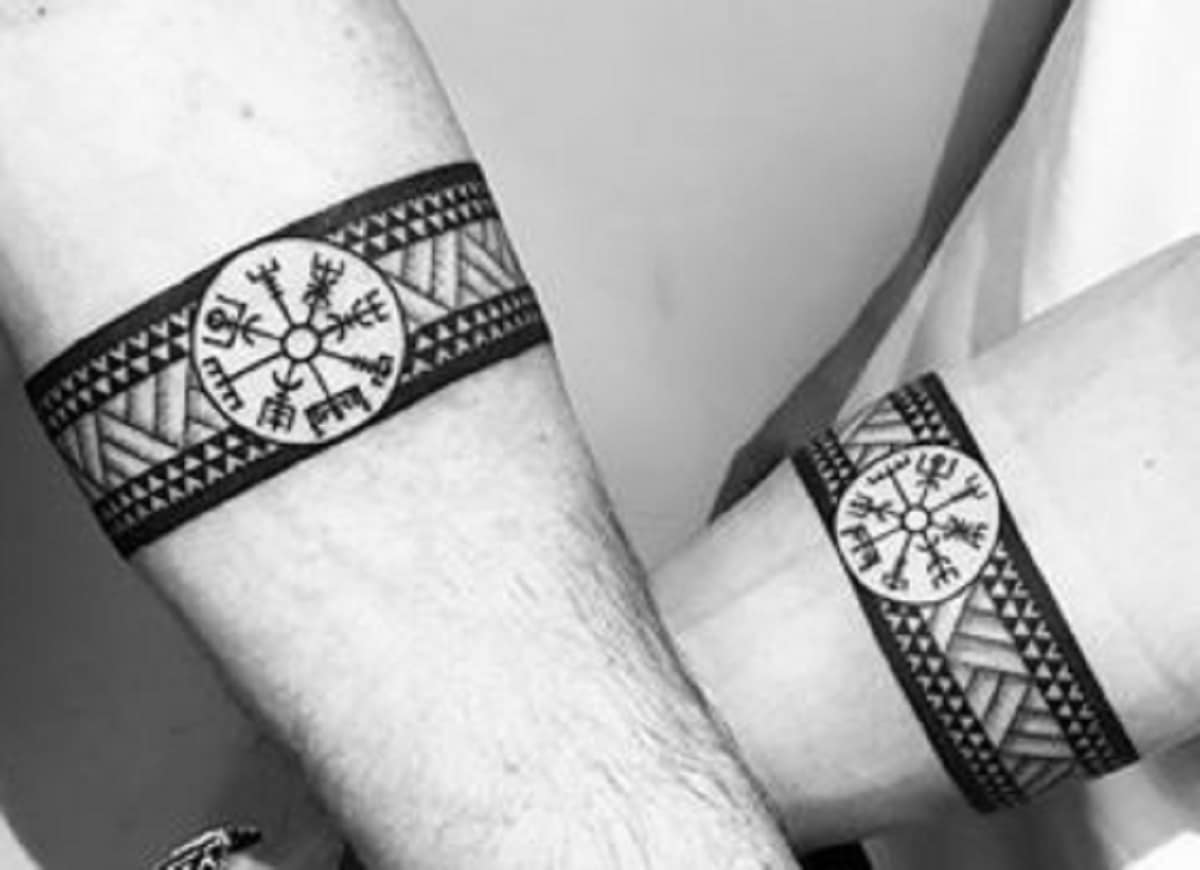
Viking wrist tattoos, often depicted as intertwined lines and symbols encircling the forearm, are believed to have served multiple purposes. They could act as a mark of achievement, a symbol of family or tribal affiliation, or a talisman for protection during battles or travels.
They were excellent explorers of the seas for that reason. their ships were very popular and distinguished from the others by their peculiar characteristics. They were long, highly ornate, and had points at each end. The spikes at each end were very useful for cutting ice.
Therefore, being pointed, they could easily move forward or backward., that greatly facilitated their navigation through icy waters.

Next, we will see the symbolism and various Viking bracelet tattoo designs so that you can identify the one that connects the most with your interior and know the meaning.
Viking armband and rune tattoos

All elements of Viking culture were highly symbolic, and their tattoos were no exception. The intricate designs of Viking wristband tattoos often incorporated a variety of powerful symbols.

The Vikings used runes, an ancient form of writing, not only to communicate, but also for their magical properties.

Each rune had a specific meaning and could invoke particular qualities or deities. Including runes in their wristband tattoos allowed Vikings to carry these symbols of power and protection with them wherever they went.
Viking bracelet tattoos with knots and geometric patterns
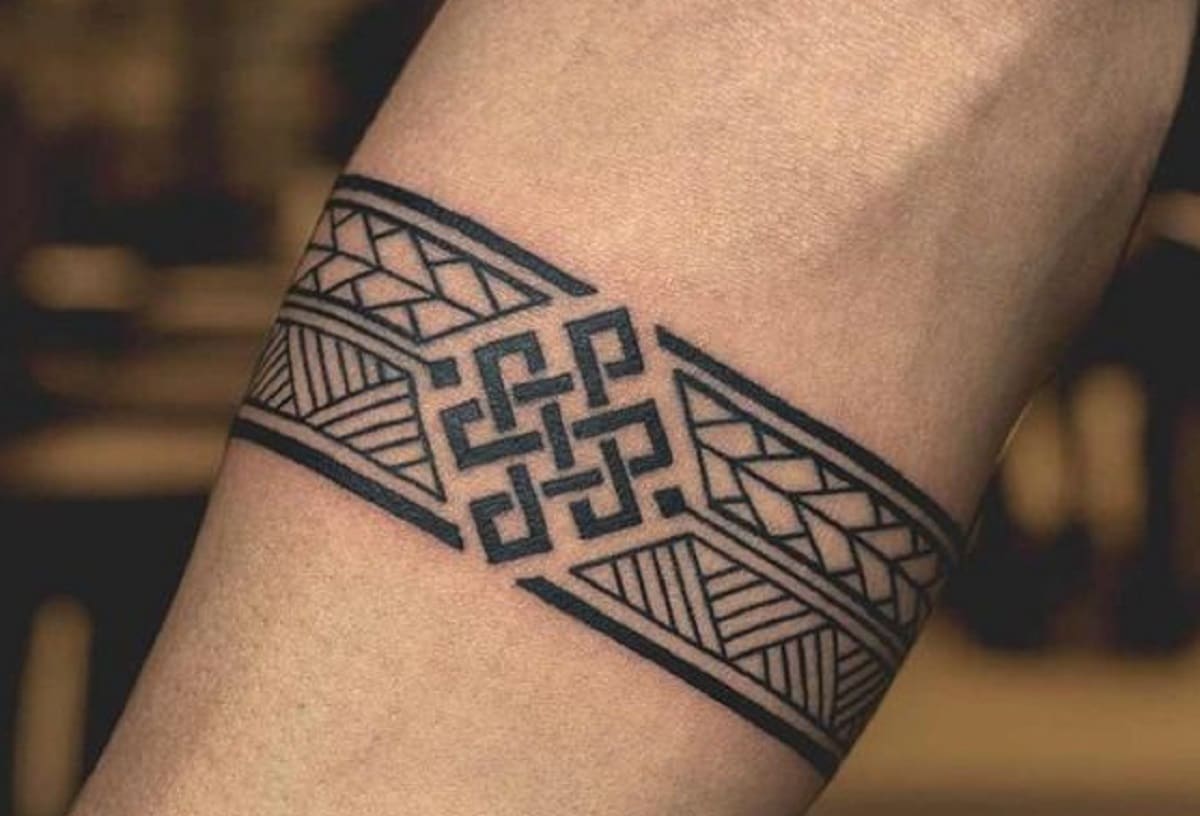
Geometric patterns, particularly knots, were prevalent in Viking art.

These intricate designs, seamlessly woven together and representing interconnectedness, were believed to create a sense of balance and harmony.

By incorporating knots into their tattoos, the Vikings tried to embody strength, order, and coherence.
Viking bracelet tattoos with animal and nature motifs

Animals held great importance in Norse mythology and society. Both domestic and wild animals were associated with various gods and goddesses, and represented different traits and virtues.

Depicting animals such as wolves, ravens, dragons, owls, eagles, on Viking wrist tattoos allowed individuals to channel the characteristics of these creatures, from fierce determination to wisdom.
Similarly, motifs from nature such as leaves, trees, and waves were frequently incorporated into Viking tattoos . The natural world symbolized the cyclical nature of life, growth, and rebirth, and these motifs served as a reminder of one's connection to the earth and the echoes of ancestral wisdom.
Viking bracelet tattoos with Vegvisir

Vikings cannot miss the addition of the symbol of the Vegvisir Viking compass, in the design of the bracelet. This design generally serves as a protection amulet from ancestral spirits. how the Vikings did it, especially when at sea.
It is a mystical design, it contains the magical nature of the runes which adds depth to the meaning, it symbolizes the warrior spirit.

Artistic significance and modern interpretations
Viking armband tattoos required not only the skill of the artisans, but also the endurance and courage of the individual receiving the tattoo. These tattoos served as a permanent and public display of a person's connection to Viking culture and their journey through life.
Today, Viking wrist tattoos continue to captivate and inspire. Many individuals opt for these designs to celebrate their Norse heritage or to embrace the Viking spirit of adventure, strength, and self-expression.
The bold lines, intricate designs, and symbolism of Viking armband tattoos make them a visually striking choice, whether adorned on the arms of men or women.
Viking tattoos also symbolize devotion to family, combat prowess, self-confidence, courage, strength, bravery.
It is important when choosing a Nordic tattoo take into account what the traditional symbols mean.
That includes gods like Thor, Odin, many times they add in their designs, compasses, runes, eagles, owls, wolves.
It is important to understand a bit of the culture, if you get a tattoo without thinking, without knowing about its unification and origin it is not a good idea. Remember that you will have it engraved on your skin for the rest of your life.
Finally, Viking armband tattoos offer insight into the fascinating history, culture and art of the Nordic people. The intricacy of the designs and the symbolism behind each element make these tattoos much more than mere body art.
They serve as a powerful connection to Viking ancestry, a reminder of the values and stories that shaped a civilization often romanticized for its fierce warriors but celebrated for its rich cultural heritage.
Table of Contents